TADDY FEEDS INVESTMENT LIMITED: The Ins and Outs of Potty Training Older Dogs
W...: The Ins and Outs of Potty Training Older Dogs Whether you’ve decided to adopt a mature dog from a shelter, or you’ve taken in a dog ...
Tuesday, October 30, 2018

The Ins and Outs of Potty Training Older Dogs
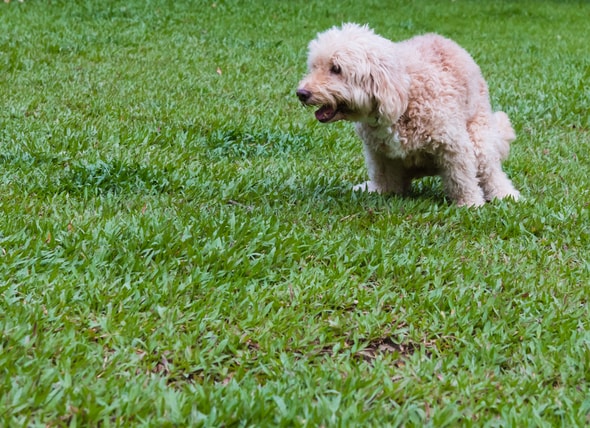
Whether you’ve decided to adopt a mature dog from a shelter, or you’ve taken in a dog from a friend or relative, you may assume that the dog is potty trained, but find out otherwise when you get home.
We’ve all heard the phrase, “You can’t teach an old dog new tricks,” but when it comes to potty training older dogs, experts agree that you can teach an older dog just as effectively as a young puppy.
“The truth is that old dogs can learn new tricks with proper training,” says Dr. Carol Osborne, a veterinarian and owner of Chagrin Falls Pet Clinic in Chagrin Falls, Ohio. “If the dog doesn’t have any medical problem, the issue can be handled, dealt with and corrected.”
Dr. Osborne says there are plenty of benefits to adopting an older dog—they typically are lower energy than a puppy, you don’t have to wonder how big they will get, and they are usually already spayed or neutered. “On the flip side, you may have a potty training issue if the dog wasn’t properly trained in its former home,” says Dr. Osborne.
If you know your dog was relinquished to a shelter or rescue due to potty training issues, Dr. Osborne says that although “it may take more time, more love and more patience” to correct any previously learned behaviors, the effort will be well worth it.
Rule Out Medical Issues Before Potty Training Older Dogs
Dr. Osborne recommends taking your new adult dog to a veterinarian for a checkup when you bring him home, especially if he is going potty inside the house.“It’s a good idea to get a full physical exam,” says Dr. Osborne. “If your dog is having problems with eliminating in the house, you will want to have stool and urine samples taken to rule out parasites or infection.” Blood testing is also important.
Your veterinarian will take into consideration any medical conditions or dog medications your dog may be on that could be contributing to the issue. If your dog does have a medical or mobility issue, you can try using dog diapers (like OUT! Disposable dog diapers), reusable dog diapers (such as Pet Magasin reusable dog diapers) or belly bands (like Pet Parents belly band dog wrap). Be sure to discuss usage with your veterinarian as some dog harnesses can lead to sores and infections of the skin if used inappropriately.
If your veterinarian gives your new dog a clean bill of health, it’s time to learn how to potty train a dog.
How to Potty Train Older Dogs
Potty training an adult dog or an older dog is very similar to potty training any dog, says Russell Hartstein, a certified dog behavior consultant and certified dog trainer and owner of Fun Paw Care in Los Angeles, California.If you want to learn how to potty train adult dogs, Here are the steps Hartstein recommends:
- Limit access to space. Hartstein says if you’re crate training your dog, you should use the dog crate to limit the dog’s space. He cautions never to use the crate as punishment. “It’s not a punishment to leave them in the crate as long as the dog is being exercised and given playtime appropriately,” says Hartstein. If you’re not crate training your dog, give him only limited space to a room using baby gates or dog pens. If your dog has eliminated in the home, don’t give him access to that same space. Each time your dog eliminates where he is supposed to, increase the amount of space until he finally has full access to a room and then the house. Hartstein says immediately giving a dog full access to the house is one of the most common mistakes dog parents make when they bring a new dog home.
- Tether your dog to you. If you’re home, you can tether your dog to your belt. Bryn Nowell of South Hadley, Massachusetts, found this method very effective when bringing home Yoda, a 2 ½-year-old Boston Terrier two years ago. Nowell says Yoda was a male breeding dog kept in an outside run, and she didn’t realize he wasn’t potty trained. Tethering him to her belt every day allowed Nowell to watch him anytime he wasn’t in his crate and also allowed her to learn his cue when he had to go.
- Decide where your dog is going to eliminate. While most dogs are taught to eliminate outdoors, some people may live in a high-rise apartment or may be physically unable to take their dogs outside. Hartstein says you can train your dogs to use dog potty pads, like Frisco potty pads, or indoor restroom potty trainers, like the Petmarker indoor restroom, by limiting them to the space with these training aides.
- Take your dog out at appropriate times. All experts agree that during dog potty training, you should take them out (or put them on their potty patch) as soon as you wake up, after meals, upon returning home and after you learn to read their cues that they need to go out.
- Hartstein says if your dog has had accidents in the home, make sure to use an enzymatic cleaner to eliminate the “mark.” Products such as Nature’s Miracle Oxy Pet Stain & Odor Remover will discourage pets from going in the same spot.
- Use a reward-based system. Hartstein says to make sure you’re actually accompanying your dog outside. “Just opening the door and letting him outside means nothing to him,” says Hartstein. The most favorable method, if you can, is to take your dog for a walk. Hartstein says to carry “high-value” dog treats with you and give your dog one as soon as he eliminates. However, don’t immediately turn around and come back home or inside after the deed is done. “The dog sees having to go inside as punishment, so continue with your walk or play afterward.”
- Learn the cues. Sometimes your dog will simply jump up suddenly and act anxious, as Yoda did, or he may learn to walk to the door. If you’re successful at potty training your adult dog, you may even teach him to give you a cue such as ringing dog training bells at the door.
Hartstein says if you’re not having success at potty training an adult dog, look at all of the factors that might be causing the issue, such as your pet drinking too much water before bed or before you leave. Eliminating could also be due to anxiety or fear-based, such as when you leave or come home (the dog gets too excited) or during thunderstorms.
If you’ve been patient and consistent and have given it at least a month and are still not having success, you might consider contacting a professional trainer. What you don’t want to do is give up, says Nowell.
“Patience is really important. A lot of individuals have an idea of how smoothly it should go, and a lot of dogs are surrendered because of potty training issues,” says Nowell. “I can’t imagine where Yoda would be if we’d given up, but now that he’s trained, I can’t imagine life without him. It’s so worth it.”
Wednesday, March 28, 2018
TADDY FEEDS INVESTMENT LIMITED: Photographer captures bittersweet spirit of a dog ...
TADDY FEEDS INVESTMENT LIMITED: Photographer captures bittersweet spirit of a dog ...: Photographer captures bittersweet spirit of a dog who has been living in a park for 13 years Sometimes, a picture paints a thousand si...
Photographer captures bittersweet spirit of a dog who has been living in a park for 13 years
Photographer captures bittersweet spirit of a dog who has been living in a park for 13 years
No one really knows how a dog ended up living in a Los Angeles-area park for at least 13 years. But every time someone spots the dog with no name, there’s always a feeling that more could be done for him. Like finding him a real home.

In a sense, John Hwang may be the only person who has come close to capturing what he simply calls "The Dog in the Park." Or at least capturing the spirit of this solitary rover — which shines through in a set of photographs he took this week.
Moving into the neighborhood about five years ago, Hwang began taking his own dogs to the park — a sprawling, often empty space.
"That’s the first time I saw that dog," he tells MNN. "But he wouldn’t let me get anywhere near him. He would kind of run off."
Last year, Hwang moved even closer to the park. And gradually, he got to know the dog a little better.
"Now, I go to this park every morning," he explains. "So I see this dog every morning. There’s kind of his spot. I’ve seen how people leave bowls of food and water for him, and leftovers."

Indeed, while no one can get near the dog, local residents have taken it upon themselves to look after him — a kind of community care that has spanned more than a decade.
"He’s kind of part of the park or neighborhood," Hwang says. "He’ll nonchalantly roam the park. He’ll walk by people. He doesn’t bother anybody or any other animals. He’s never barked."
And like everyone else who sees this dog, there’s an inexplicable fascination — maybe even admiration — for the life he leads.
"This dog is just very robust, resilient and smart," Hwang adds. "He lives a very free life. Like a hippie dog."
Get too close, and he’s gone.

Lately, a lot of well-meaning people have descended on the park. Hwang says there’s a renewed effort to capture him. Maybe they'll finally succeed, or maybe the Dog in the Park will fade into the greenery as he has before.
But not without reminding us that not every dog comes home to kibbles and bits and kisses from a fawning family. Some dogs, like humans, walk a different path.
And somehow, this dog has managed to find a kind of life — even if it isn’t everyone’s idea of a good kind of life.
"It’s this dog’s home."
Friday, December 29, 2017
TADDY FEEDS INVESTMENT LIMITED: TADDY FEEDS INVESTMENT LIMITED: Top 10 Dog Breeds ...
TADDY FEEDS INVESTMENT LIMITED: TADDY FEEDS INVESTMENT LIMITED: Top 10 Dog Breeds ...: TADDY FEEDS INVESTMENT LIMITED: Top 10 Dog Breeds Suitable for Young Kids : Top 10 Dog Breeds Suitable for Young Kids What do...
What Dog Breed Should You Get Based on Your Personality Type?
Because no introvert should have a beagle
Getting a dog is a big decision, and no two breeds are exactly
the same. For example, a lazy basset hound may be content chilling all
day on his doggy bed, but that frisky golden retriever isn’t going to
entertain himself. You might want to rethink which dog is right for you.
Here are the breeds best suited for each Myers-Briggs personality type.

Pekingese
Sure, she might look like an ottoman, but this confident and self-possessed dog doesn’t care what you think about her. She likes to assert control, and she’ll ignore your scolding with little regard for the consequences. Rest assured: Once you gain this breed’s respect, they are reliable and well mannered.
German Shepherd
It would be difficult to find a more loyal breed. Watchful, obedient and intelligent, they want to serve a purpose and keep everyone safe, which often leads them to be overprotective of their families. If you can relate, a German shepherd might be the perfect companion to share the load of responsibilities.
Australian Shepherd
Originally bred to herd sheep, Aussies are workaholics that try tirelessly to tackle any task put in front of them. Energetic, intelligent and loyal, helping others is their main purpose…and it’s probably yours, too.
Jack Russell Terrier
Smart but possessing a mind of their own, these agile and energetic terriers will always move to the beat of their own drums. They are great dogs for families, but they also enjoy alone time.
Rhodesian Ridgeback
These handsome and athletic dogs are known for their exploratory and active personalities. They love to get their paws dirty and experience the world…and they can even be a bit daredevilish, unafraid to break from the pack. Remind you of anybody?
Shiba Inu
Fox-like in appearance with upright ears, this Japanese breed is easygoing, peaceful and alert. Though they make great companions, they’re happy minding their own business, laying on a patch of grass and contemplating the ways of the world.
Tibetan Terrier
These guys are notoriously aloof and reserved to strangers, but they grow to be very affectionate of the people they trust. Sound familiar? Though he’ll rarely curl up on your lap, he’ll follow you around the house like your shadow.
Chow Chow
Is that a lion!? No, it’s just a chow chow--although, this breed’s aloof and pensive personality is closer to that of a feline. Chow chows tend to be intelligent, but given their indifferent personalities, they may appear to have their heads in the clouds. That said, these fluffy giants prefer to be by your side than alone.
Beagle
Beagles are playful and active, constantly searching for new adventures. As a result, they’ll get into trouble if not given frequent attention and activity. But at the end of the day, they’re amiable and love constant social interactions.
Corgi
Just look at their constantly smiling faces: Corgis are the life of the party, and they’re always ready to play. They’re so playful, in fact, that they often have trouble focusing on one task at a time.
Labrador Retriever
Warm, compassionate and intelligent, but also built for sport and activity, these big dogs are always looking for a new adventure. A dip in the ocean, a jaunt in the mountains--they’re game for whatever escapade you take them on.
French Bulldog
This lady may be small in stature, but she’s got a big, lively personality. Don’t let her frowning face fool you: She’s friendly and lovable, albeit a bit feisty. Her stubborn personality may make her inclined to go against your wishes--like chew on your sneakers or jump on the off-limits sofa.
Siberian Husky
Ah, the active, outdoorsy husky. He is always looking for action, especially in cold weather (hence, his common role as a sled dog). While these wolfish animals are generally good-natured and very dependable, their personalities can be domineering.
Bichon Frise
The “cheerleader” of the dog world, these little white bundles of joy are, above all, social creatures. Gentle, playful and loving, they thrive on human interaction and will do their best to make people happy.
Golden Retriever
Passionate, charismatic and hands down the cutest pups, goldens are constantly standing up for the people they love. They’re impressively tuned in to the needs of others around them and live for social connections with others. They’ll be the first to dive into the pool after you or fall asleep on the foot of your bed.
Tibetan Mastiff
Charismatic and confident, these giant, furry creatures are intelligent and determined, and they love a good challenge. Be warned, they can often be commanding and fairly difficult to train, so definitely keep an eye on who’s actually the leader of pack.TADDY FEEDS INVESTMENT LIMITED: Top 10 Dog Breeds Suitable for Young Kids
TADDY FEEDS INVESTMENT LIMITED: Top 10 Dog Breeds Suitable for Young Kids: Top 10 Dog Breeds Suitable for Young Kids What dog breeds will get along with your young family? A dog is famously...
Top 10 Dog Breeds Suitable for Young Kids
Top 10 Dog Breeds Suitable for Young Kids

A dog is famously
considered to be man's best friend, but while it's a beautiful thought
in itself, your pet can become so much more than that. Beyond friends,
they are protectors, a source of comfort, and can easily become members
of your family. They grow to be an integral part of your life, making it
easy for you to trust them. Not just with your expensive shoes or
fragile furniture in the house, but with the people around you, as well.
This is especially the case with children. Dogs can have numerous benefits for your kids
and can help advance their development and promote harmony within your
family. Besides the fact that they're extremely cute and fun to have
around, they could be just the right addition. As long as you raise them
right, they will be incredibly outgoing, friendly, and energetic, which
is precisely what a young child needs in a companion. If you believe
yourself to be ready, and you know your kid is ready too, here are ten
dog breeds that will be suitable for your child and who will sync
perfectly with your family.
If you've seen
"Beethoven", perhaps you're already sold on getting a Saint Bernard for
your child. However, if you're not convinced yet that the furry giant
will be a suitable companion, know that this dog was bred to assist
people. The Saint Bernard has a long history of helping people through
their travels and hardships, so they developed a natural love for
humans. They have quite a relaxed temperament, playful, and most
importantly for kids, they're very, very patient. When mixed with their
sweet demeanor, this patience will make them an incredible pet. This is
especially the case since they can take any accidental hits or toys
thrown at them due to their size, without acting out with aggression.
With their tiny legs
and long bodies, Corgis have become a favorite of children. They're
adorably small and full of energy, ready to play at any time. Whether
you opt for the Pembroke Welsh Corgi or the Cardigan Welsh Corgi, expect
to have one of the sweetest and most playful critters out there. In
fact, it's a guarantee they will be able to keep up with your kid and
become a very loving companion. Their size is also a tremendous
advantage because it's easier to take care of them.
The Dalmatian is
another iconic breed of dog due to the Disney animation and movie "101
Dalmatians". These dogs were depicted as intelligent and family-friendly
animals, who are easily trained to adapt to any kind of house. And they
were right. The spotted pooch possesses excellent abilities to learn
how to handle their environment and people around them. They will be the
essence of discipline, one that will surely love to play with your
child.
These adorable
tri-colored giants are famous for being both calm and goofy. Originally
bred for farm work, such as aiding in gathering the sheep in their
stocks, the Bernese Mountain Dog is exceptionally easy to train. With
just a bit of dedication, this breed will become the perfect mix of
discipline and playfulness at the same time. They will act goofy around
your kid, make them laugh, run around, and they will immediately stop if
that's your command. However, keep in mind that they require large
spaces. They need room to run, and it's only recommended that you meet
their needs before thinking of getting one for your family.
Dubbed as one of the
happiest dogs on the planet, English Cocker Spaniels are set to bring
joy to every member of the family. They're always wagging their tail,
eager to please, and happy to just be around you. Kids love them because
of their forever-sunny disposition that borderlines on almost comical
at times. They are loving, intelligent, and incredibly loyal. Be sure
you're ready to handle their energy because these adorable critters will
always be following you and jumping around, willing to play.
"Lassie" might've made
this particular breed famous, but its exceptional intelligence and
active demeanor is what kept it among the most popular choice for
children. The Collie was originally trained for farm work, just like the
Bernese Mountain Dog, which means that it is highly receptive to
training. Collies get along exceptionally with children and have the
stamina to keep them entertained for a long time. The Collie is also
very mild-mannered. They are one of the unlikeliest dogs to bite their
human owners. You only need to remember that this breed can sometimes be
shy. Be sure to socialize them from a very young age, so it won't have
issues with other dogs in the future.
You will often find
yourself wondering if the Beagle drank all the coffee in your house
because it refuses to stay still. This little bundle of energy is
incredibly loving and happy, always willing to play. It's perfect for
children as they will run and chase them, be it around the apartment or
yard. Their size makes them the prime companion for any type of home.
The Beagle will bond quickly and deeply with every single member of your
family, especially your child. They absolutely adore children because
they're the only ones coming close to nearly buzzing with energy as this
dog is. Your kid will surely wear out after an intense playing session,
long before the Beagle will.
Do you remember Nana
from "Peter Pan"? She was the kids' watcher and a Newfoundland.
Otherwise called Newfs, these gentle giants have been nicknamed
"Nature's nanny" because of their unwavering devotion and loyalty. Never
be intimidated by their appearance. These black-furred mammoths could
not be gentler, calmer, and more careful around your child. They have a
very sweet and patient temperament, and all that extra fluff will make
your kid fall in love with them instantly. Newfs are extremely good
companions and, even more, they want to be part of your family.
One look at that
adorable face inspires the essence of the Labrador: playful, fun-loving,
and outgoing. This dog will have no problems making friends with
anyone, be it dogs, cats, adults, children, guests, your mail carrier or
virtually anyone else. As long as you have a hand willing to pet them,
they will become your best friend and your most loyal companion.
Labradors love to play, always bouncing around seeking the best next
adventure. They are near exhaustingly athletic, loyal, and protective.
In good or bad, sleeping or awake, this dog will be there for you, ready
to put a smile on your child's face.
Your Mental Health Suffers When Your Pet Is Sick
Your Mental Health Suffers When Your Pet Is Sick

The caregiver burden is an acknowledged fact in the human medical community, but this is the first research I’ve seen that addresses it in the veterinary world. In an editorial about this paper, Dr. Katherine Goldberg, founder of Whole Animal Veterinary Geriatrics & Hospice Services in Ithaca, New York, compared the experiences of caregivers looking after sick people and animals this way:
Few people in contemporary society would consider providing 24-hour care for our ailing family members without professional help. Yet, this is what we expect of ourselves for our pets and then feel guilty when we struggle or cannot do it at all. On the human side of health care, we have options when people require support beyond what can reasonably or safely be provided at home by family members—assisted living facilities, in-home health care aides, visiting nurse associations, memory care centres and, for better or worse, nursing homes. I hear myself saying, ‘You are the assisted living facility’ to my clients—caregivers of seriously and terminally ill pets—on a regular basis. Often this framing helps to provide clients with perspective around why daily life with their pet feels so hard.
Caregiver Support: Asking for Help
I have ample experience with the caregiver burden, having taken care of many of my own animals at the end of their lives and helped many owners through the process as a veterinarian. Let me share a few things I’ve learned.Caretaking duties seem to primarily become the responsibility of one person. If this person is you, please ask for help. Giving seriously ill pets all the care and love they need is very hard work. It’s simply impossible to do it well over an extended period of time without also taking care of yourself. If you don’t have family or close friends who can take over from time to time, reach out to your veterinarian. Perhaps a technician or assistant would be willing to come to your house and “babysit.” Or, if your pet needs to visit the clinic for a checkup or procedure, ask whether you can take advantage of a few hours of day care so you can go for a walk, get a massage, or take a nap.
If you are uncomfortable delegating the care of your sick pet, ask for help in other aspects of your life. Could friends, family members, neighbors, etc., cook you some easy-to-reheat meals, take your other pets or kids out for a play date, do your laundry or errands, clean your house, or manage any of your other responsibilities? People love to help but often don’t know what is needed, so speak up.
Finally, take a moment every now and then to assess how you are doing. If you are having trouble coping, know that help is available through veterinarians, physicians, counselors, religious or spiritual leaders, and pet loss support groups. You don’t have to face this alone.
Alcohol Risks for Pets: Beer, Wine, and Liquor
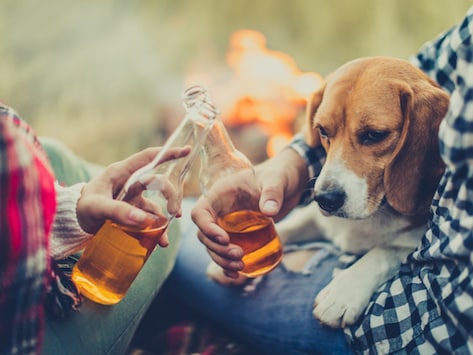
Sure, alcohol toxicity in pets is very rare. “We don’t see much of this in vet medicine because alcohol tends to be distasteful to most animals,” says Dr. Steven Friedenberg, an assistant professor in the department of veterinary clinical sciences at the University of Minnesota College of Veterinary Medicine. “They don’t regularly seek this out, and most owners don’t deliberately feed their animals alcohol.”
But during the holidays, sometimes things can get out of your (or your pet’s) control. If your pet does get into alcohol, it can affect him in the same way it affects humans—either get him a little buzzed or, in the most extreme cases, cause him to wind up in the hospital. Here’s what to know about your pet’s alcohol risks.
It Comes Down to Alcohol Content
Rather than the type of alcohol your pet consumes, what you should really be concerned with is how much they get into. “We have this mythos in humans like, ‘I can’t drink tequila,’ or, ‘Rum is really bad for me,’” says Dr. Christine Rutter, a clinical assistant professor in the department of small animal clinical sciences in the College of Veterinary Medicine & Biomedical Sciences at Texas A&M University. “You may have a reaction to something specific in that product, but pound for pound, it’s the ethanol that gets you.”The same can be applied to pets. But since most pets are much smaller than humans, a smaller dose of alcohol can prove more dangerous to them than it would be to us. “A dog weighs substantially less and is not used to consuming alcohol,” says Rutter. “So processes that break down alcohol are not regulated in a dog the same way as a person who consumes alcohol once in a while.”
If you do find your dog licking up the last remains of a bottle, worry about the strength of alcohol the same way you would if it were a friend who might have drunk too much. Light beers are the least dangerous since their alcohol content is less, followed by craft beers, wine, hard liquors, and finally, grain alcohols like Everclear. And since ethanol is what’s truly dangerous to animals, also be on the lookout for pets getting into cleaning products, mouthwash, or hand sanitizer, some of which have ethanol in them.
Although wine does have grapes in it, which can be extremely dangerous to dogs, there’s no research showing that wine is more dangerous to dogs than other types of alcohol, says Rutter. Rather, it once again all boils down to just how much alcohol your pooch got into.
Be Especially Cautious of Certain Ingredients
Although an animal won’t be likely to take more than one sip of a glass of wine or a scotch on the rocks, certain mixed drinks or alcohol-based cakes could be sweet enough or have ingredients that appeal to animals. And sometimes these other ingredients (chocolate, grapes, raisins, or macadamia nuts, for example) are dangerous in and of themselves. You should also be on the lookout for hidden sources of alcohol, like certain flavorings, including vanilla and almond, and for spices that might contain essential oils, like cinnamon. “That can be irritating to the gastrointestinal tract,” says Rutter.Notice the Signs of Alcohol Toxicity
When it comes to alcohol toxicity in pets, the signs usually appear the same as they would in humans. “Alcohol poisoning would present similarly as it might present in people,” says Friedenberg. “So there could be gastrointestinal upset. They might vomit or become nauseated, and they can get wobbly.” Other symptoms can include increased thirst and urination, lethargy, disorientation, and, in severe cases, you might notice muscle tremors, paralysis, extremely slow and shallow breathing, seizures, and your pet may lose consciousness, adds Dr. Jennifer Coates, veterinary advisor.In mild cases of alcohol exposure, pets generally recover with time and no other treatment, Coates says. “Simply let them ‘sleep it off’ in a safe environment,” she says. “But if you think that your pet could have ingested a large amount of alcohol or is starting to have worrisome clinical signs, seek out immediate veterinary care.” The vet can hospitalize your pet if need be while giving him intravenous fluids and any other treatment that might be necessary.
Although an animal getting alcohol toxicity to the extent of requiring hospitalization is extremely rare, just like for you, the holidays can be an overwhelming time for your pet. “Even if you have an amazingly well-behaved dog, the holidays are full of change in the environment,” says Rutter. Whether it be the introduction of a Christmas tree into your house or more people running around than usual, all the changes during the holidays can cause anxiety in your pet.
That, in turn, can cause them to act in ways they normally wouldn’t, like table surfing or digging in the trash for leftovers. So, avoid any dangerous run-ins for your pet by keeping any risky food or drinks out of their reach. “Even a good dog during stressful times will act up,” says Rutter.
Are Cats or Dogs Smarter? Scientists Break Down the Numbers
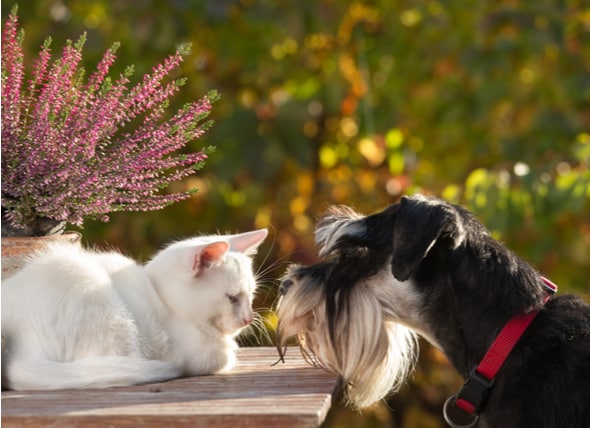
While pet parents of each respective animal will argue that their cat or dog is the smartest creature out there, it's dogs who have the numbers in their favor, according to recent findings in the journal Frontiers in Neuroanatomy.
The study—which was conducted by researchers from around the world (including the Copenhagen Zoo in Denmark)—concludes, among other findings, that dogs have more neurons than cats. Researchers found that dogs have over 500 million neurons in the cerebral cortex, compared to roughly 250 million in the cat's brain. (The researchers studied two dog brains and one cat brain.)
Though dogs don't have the largest brain in the animal kingdom, their intelligence is on par with that of raccoons or lions.
In fact, the size of an animal didn't necessarily have an impact on the number of neurons. For instance, a bear has roughly the same amount of neurons as a domestic cat.
So, is this the end-all, be-all when it comes to whether cats or dogs are smarter? Well, it's a little bit more complex than that.
One of the study's researchers, Jessica Perry Hekman, a veterinary geneticist at MIT and Harvard's Broad Institute, told The Washington Post, "I'm not even really sure we should call intelligence one trait. It's a lot of different things."
TADDY FEEDS INVESTMENT LIMITED: 6 Reasons Why It’s Hard for Veterinarians to Talk ...
TADDY FEEDS INVESTMENT LIMITED: 6 Reasons Why It’s Hard for Veterinarians to Talk ...: 6 Reasons Why It’s Hard for Veterinarians to Talk About Overweight Pets I’ve been a veterinarian for many years, but obesity is really...
6 Reasons Why It’s Hard for Veterinarians to Talk About Overweight Pets
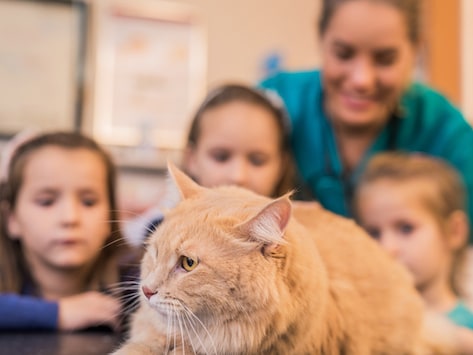
1. Many pet owners won’t acknowledge that their pet is overweight or don't equate their pet being overweight with illness. The fact is that even pets who are 15 percent overweight (an ideal weight cat of 10 pounds who weighs just 11.5 pounds) already have inflammatory changes in the body causing damage. Getting the client to acknowledge the problem can make the discussion delicate and time consuming. The veterinarian may feel they risk losing trust with the client and may not go there (or go there strongly enough). At our clinic, we simply focus on always being the pet’s advocate and try and communicate the risks and benefits of obesity as clearly as possible without offending.
2. A body condition score (BCS), body weight and muscle condition score (MCS) need to be taken routinely and trends monitored. We have good tools to do this and can easily teach the owner how to monitor these at home. An accurate scale and good visuals help everyone in the family understand the goal. Monthly reassessment is recommended if pets are more than 20 percent overweight. But repeat visits also take time and cats, in particular, are usually not fond of car rides. We try and paint reassessment visits as “easy, friendly visits” and a good time to pick up food or flea, tick, or heartworm preventives.
3. A safe, effective food recommendation must be made. With over 15,000 different brands, there is currently no way for the veterinarian (or pet owner) to easily choose a safe, healthy food. That along with the “over-marketing” of grain-free, raw, and natural foods, which many times are not science-based at all, can cause us to hesitate on a recommendation. If the pet is 20 percent or more overweight, almost all board-certified veterinary nutritionists highly recommend a prescription diet for the pet to safely lose weight without losing muscle mass or depleting micronutrients. The top pet food companies all have Rx diets that are moderate calorie and higher in protein that burn fat while maintaining muscle condition and satisfying the pet.
4. The correct number of calories needs to be calculated. Calorie calculation has been made much easier by the Pet Nutrition Alliance (PNA) nutritional calculator. The PNA does not recommend a food, but based on your pet’s current BCS, it will give a starting calorie number. (Again, reassessment is stressed.)
5. Veterinarians, in general, are no better trained in nutrition than physicians. There are only 85 board-certified veterinary nutritionists in the world. Some veterinary schools aren't lucky enough to have one, they are in such short supply. But there are more and more continuing education courses focusing on weight management and the profession is slowly coming up to speed.
6. Treating pet obesity involves changing how we feed our pets, so it can be an emotional, not a “fun” topic. OK, so neither are fleas, ticks, and vaccines, necessarily, but getting a client motivated to change strong pet-feeding-related behaviors can be challenging. At our clinic, we hold an annual “Pets Reducing for Rescues” contest, donating money to rescues to increase the fun, and client motivation and buy-in. By rewarding with prizes like activity monitors, microchipped and automatic feeders, under litter box scales, etc., and holding regular weigh-ins, people are more engaged and find that weight loss isn't so difficult after all. We even have a fully equipped cat gym (yes, a cat gym!) to send the message of how important home activity is and to gather cat owners monthly to discuss nutrition and cats’ indoor needs.
Yes, we are sometimes fighting an uphill battle with all these obstacles. But the goal is a vital one. It has been proven that ideal weight dogs live an average of 15 percent longer, and that has been proven in most other species, too. Just as importantly, they feel better, have less medical problems, are more active, and the human health bond is enriched. It can be done. As they say, let's just do it!
Subscribe to:
Posts (Atom)